Best brunch in Milan/Bedste brunch i Milano

Dansk

Best brunch in Milan

We have divided Milan into 10 areas, click on the one you are interested in:

We do like a great brunch at the weekend. We have selected some of the best Milan has to offer divided by area. Prices are € – €15-20, €€ – 20-40, €€€  – 40-60. One of the peculiarities of brunch places in Milan is a rotation system so you won’t be able to hang out for the entire duration, it is necessary to book if you want to be sure to get a table (we have included their phone numbers).

Duomo area

Ostello Bello €
4, Via Medici (find on map)
+390236582720
12-3.30 pm Saturday and Sunday.

California Bakery €€
19, Via Larga (find on map)
+390239811750
11 am-5 pm Saturday and Sunday.

God Save the Food €€
1, Piazza del Carmine (find on map)
+390222229440
12-4 pm Saturday and Sunday.

Brera area

Pandenus Mercato €€
24, Via Mercato (find on map)
+39028693391

La Tartina €€
4, Via Carpoforo (find on map)
+390236704900

N’Ombra de Vin €€
2, Via San Marco (find on map)
+39026599650

Radetzky €€
105, Corso Garibaldi (find on map)
+39026572645
8-1.30 am Monday to Thursday, 8-2 am Friday and Saturday and 10-1.30 am Sunday – great location and service.

Restaurant on tracks ATMosfera

ATMosfera €€€
A very unusual combination of Brunch and sight-seeing on one of Milan’s historical trams. The duration is of 2.30 hours.
Leaves from 2, Piazza Castello (find on map).
Saturdays and Sundays 11.30 am-2 pm

Porta Nuova area

California Bakery €€
5, Corso Como (find on map)
+390239811750
11 am-5 pm Saturday and Sunday.

Corso Como with café California Bakery in foreground

Da Otto €
8, Via Paolo Sarpi (find on map)
+390283417249
12.30-3 pm Sunday.

Isola area

Café Gorille €€
20, Via Gaetano de Castillia (find on map)
+39026887627
8 am-3.30 pm Saturday and Sunday.

Porta Genova area

Hygge €€
3, Via Giuseppe Sapeto (find on map)
+393381603861
11 am-3 pm Saturday and Sunday

Le Biciclette
Via Torti 2 (find on map)
+390258104325
Weekends 12-4 pm

Arco della Pace and Parco Sempione area

BhangraBar €
1, Corso Sempione (find on map)
+390234934469
12-3 pm Sunday.

Deseo €€
2, Corso Sempione (find on map)
+3902315164
12-4 pm Sunday.

Dazi Milano €€
1, Piazza Sempione (find on map)
+390236706230
Saturday and Sunday 11 am-4 pm

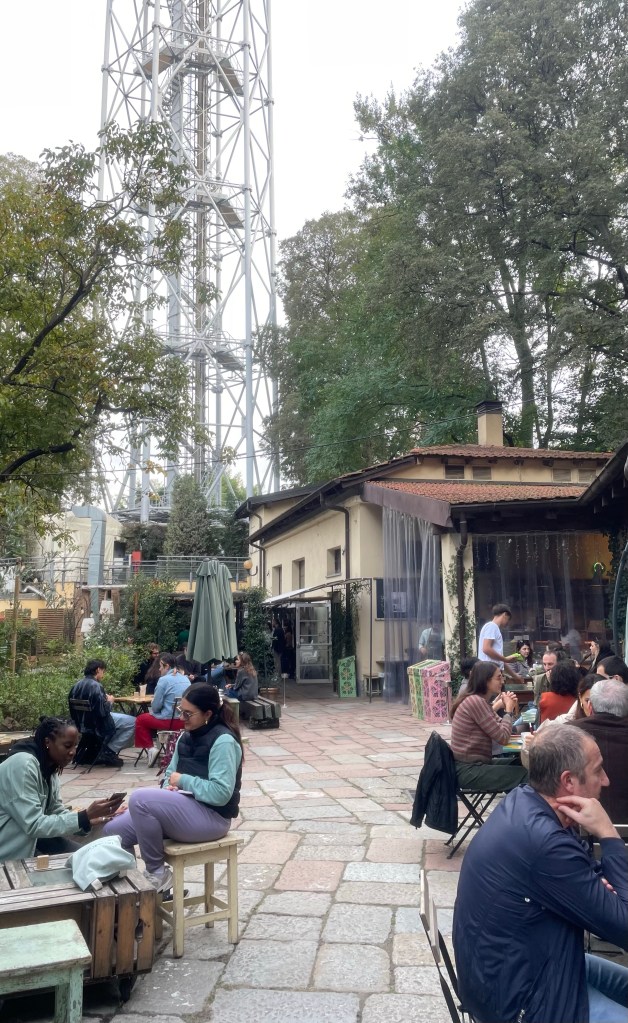
Cascinba Nascosta in Parco Sempione

Cascina Nascosta (The hidden fartmhouse) €€
14, Viale Emilio Alemagna (find on map) in the middle of Parco Sempione and yet tucked away and unknown to many
+393406755196

California bakery €€
4, Piazza Sant’Eustorigio (find on map)
+390239811750
11 am-5 pm Saturday and Sunday.

The Brisket €€
65, Ripa di Porta Ticinese (find on map)
+39028323479
12-2.30 pm Saturday and Siunday

Via Tortona/Via Savona area

God Save the Food €€
34, Via Tortona (find on map)
+390289423806
12-4 pm Saturday and Sunday.

Porta Venezia area

LùBar €€ (brunch a la carte)
16, Via Palestro (find on map)
+390283527769 – book at l’east 2 days in advance for the weekend. It more a lunch place but you can light dishes + cappuccino, coffee and orange juice.
8 am-midnight Tuesdays-Sundays

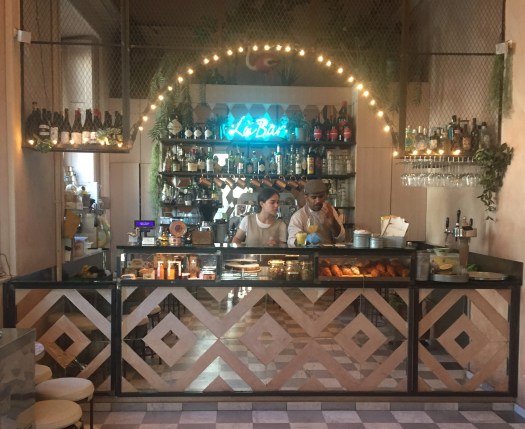
LúbBar in Via Palestro, Milan - the counter

Chateau Monfort €€€
1, Corso Concordia (find on map)
+3902776761
12.30-3 pm Sundays.from September to May.

California Bakery €€
44, Viale Premuda (find on map)
+390239811750
11 am-5 pm Saturday and Sunday.

Porta Romana area

Brunch plate at NaBI

NaBI €
41, Via Cadore (find on map)
+393271520264
Vegetarian and Vegan, Saturdays and Sundays 10 am-2.30 pm

Porta Vittoria area

Mugs and co €
4, Via Emilio Morosini (find on map)
+3987383354
8 am-2 pm every day

Cocotte €
1, Via Benvenuto Cellini (find on map)
+390255189509
10 am-4 pm Saturday and Sunday.

Rotonda Bistro €€
12, Via Enrico Besana (find on map) Located inside the lovely Rotonda della Besana
+393888593490
10 am-12 every day except Mondays

Bedste brunch i Milano

Vi har opdelt Milano i 10 onråder, klik på det, du er interesseret i:

Vi elsker virkelig at spise en lækker brunch i weekenden. Vi har valgt nogle af de bedste Milano har at byde på og delt dem indefter område. Priserne er € – 15-20€, €€ – 20-40€, €€€ – 40-60€. En af de lidt sære ting ved mange brunch steder i Milano er et roterringssystem, så du får ikke love til at hænge ud under hele åbningstiden, det er nødvendigt at reservere bord, hvis du vil være sikker på at få et bord (vi har inkluderet telefonnumrene).

Duomo området

Ostello Bello €
Via Medici 4 (find på kort)
+390236582720
Kl. 12-15.30 lørdag og søndag.

California Bakery €€
Via Larga 19  (find på kort)
+390239811750
Kl. 11-17 lørdag og søndag.

God Save the Food €€
Piazza del Carmine 1 (find på kort)
+390222229440
Kl. 12-16 lørdag og søndag.

Brera området

Pandenus Mercato €€
Via Mercato 24 (find på kort)
+39028693391

La Tartina €€
Via Carpoforo 4 (find på kort)
+390236704900

N’Ombra de Vin €€
Via San Marco 2 (find på kort)
+39026599650

Radetzky €€
Corso Garibaldi 105 (find på kort)
+39026572645
Kl. 8-1.30 mandag til torsdag, 8-2 fredag og lørdag og kl. 10-1.30 søndag, fantastisk beliggenhed og service!

Restaurant on tracks ATMosfera

ATMosfera €€€
En meget usadvanlig kombination af Brunch og sight-seeing pè en af Milanos historiske sprovogne. Turen varer 2.30 time.
Start fra Piazza Castello 2 (find on map).
Lørdag og søndag. 11.30-14

Porta Nuova området

Corso Como with café California Bakery in foreground

California Bakery €€
Corso Como 5 (find på kort)
+390239811750
Kl. 11-17 lørdag og søndag.

Da Otto €
Via Paolo Sarpi 8 (find på kort)
+390283417249
Kl. 12.30-15 søndag.

Isola området

Café Gorille €€
Via Gaetano de Castillia 20 (find på kort)
+39026887627
Kl. 8-15.30 lørdag og søndag.

Porta Genova området

Hygge €€
Via Giuseppe Sapeto 3 (find på kort)
+393381603861
Kl. 11-15 lørdag og søndag.

Le Biciclette
Via Torti 2 (find på kort)
+390258104325
Weekenderne kl. 12-16

Arco della Pace og Parco Sempione området

BhangraBar €
Corso Sempione 1 (find på kort)
+390234934469
Kl. 12-15 søndag.

Deseo €€
Corso Sempione 2 (find på kort)
+3902315164
Kl. 12-16 søndag.

Dazi Milano €€
Piazza Sempione 1 (find på kort)
+390236706230
Lørdag og søndag kl. 11-16.

Cascinba Nascosta in Parco Sempione

Cascina Nascosta (Den skjulte gård) €€
Viale Emilio Alemagna 14 (find på kort) midt i Parco Sempione og alligevel gemt af vejen og ikke kendt af ret mange.
+393406755196

California bakery €€
Piazza Sant’Eustorigio 4 (find på kort)
+390239811750
Kl. 11-17 lørdag og søndag.

The Brisket €€
Ripa di Porta Ticinese 65 (find på kort)
+39028323479
12-14.30 pm lørdag og søndag.

Via Tortona/Via Savona området

God Save the Food €€
Via Tortona 34 (find på kort)
+390289423806
Kl. 12-16 lørdag og søndag.

Porta Venezia området

LúbBar in Via Palestro, Milan - the counter

LùBar €€ (brunch a la carte)
Via Palestro 16 (find på kort)
+390283527769 – reserver mindst 2 dage i forvejen til weekenden. Det er mere et frokoststed, men du kan få lette retter + kaffe og friskpresset appelsinjuice.
Kl. 8-midnat tirsdag-søndag

Chateau Monfort €€€
Corso Concordia 1 (find på kort)
+3902776761
Kl. 12.30-15.30 hver dag fra september til maj.

California Bakery €€
Viale Premuda 44 (find på kort)
+390239811750
Kl. 11-17 lørdag og søndag..

Porta Romana området

Brunch plate at NaBI

NaBI €
Via Cadore 41 (find på kort)
+393271520264
Vegetariansk og Vegansk, lørdag og søndag kl. 10-14.30

Porta Vittoria området

Mugs and co €
Via Emilio Morosini 4 (find på kort)
+3987383354
8-14 hver dag

Cocotte €
Via Benvenuto Cellini 1 (find på kort)
+390255189509
Kl. 10-16 lørdag og søndag

Rotonda Bistro €€
Via Enrico Besana 12 (find på kort) Ligger inde i den smukke Rotonda della Besana
+393888593490
Kl. 10-12 hver dag undtagen mandag.

Great open air markets in Milan/Fantastiske åbne markeder i Milano

Dansk

Great open air markets in Milan

Milan’s open air markets don’t only sell fresh produce but also offers good bargains in shoes and clothes, there are several every day except on Sundays. There’s life, commotion, genuine Italian atmosphere and competitive prices. We have chosen the most central ones for you.

A stand at a Milan open air market

Monday

Brera, Via San Marco (find on map), 7.30 am-2 pm.

Via Kramer (find on map), 7.30 am-2

Tuesday

Viale Papiniano (find on map), 7.30 am-2 pm

Via Fauchè (find on map) 8 am-1 pm great for shoes and clothes

Wednesday

Via Borsi (find on map), 7.30 am-2 pm.

Thursday

Brera, Via San Marco (find on map), 7.30 am-2 pm

Via Cesariano (find on map), 7.30 am-2 pm

Friday

Via Crema/Via Piacenza (find on map), 7.30 am-2 pm

Via Pagano (find on map), 7.30 am-2 pm

Saturday

Bastioni di Porta Nuova (find on map), 7.30 am-2 pm

Viale Papiniano (find on map), 7.30 am-6 pm

Via Fauchè (find on map) 8 am-6 pm great for shoes and clothes

Fantastiske åbne markeder i Milano

Milanos store udendørsmarkeder sælger ikke bare mad, du kan gøre rigtig gode fund i sko og tøj, der er flere hver eneste dag undtagen søndag. Der er liv, larm, ægte italiensk atmosfære og gode priser. Vi har valgt de mest centrale til dig.

A stand at a Milan open air market

Mandag

Brera, Via San Marco (find på kort), kl. 7.30-14

Via Kramer (find på kort), kl. 7.30-14

Tirsdag

Viale Papiniano (find på kort), kl. 7.30-14

Via Fauchè (find på kort) 8-13 fantastisk for sko og tøj

Onsdag

Via Borsi (find på kort), kl. 7.30-14.

Torsdag

Brera, Via San Marco (find på kort), kl. 7.30-14

Via Cesariano (find på kort), kl. 7.30-14

Fredag

Via Crema/Via Piacenza (find på kort), kl. 7.30-14

Via Pagano (find på kort), kl. 7.30-14

Lørdag

Bastioni di Porta Nuova (find på kort), kl. 7.30-14

Viale Papiniano (find på kort), kl. 7.30-18

Via Fauchè (find på kort) 8-18 fantastisk for sko og tøj

The best outdoor swimming pools in Milan/De bedste friluftsbade i Milano

Dansk

The best outdoor swimming pools in Milan

When it gets too hot to wander the streets of Milan you can spend a day in of the city’s outdoor swimming pools:

Outdoor swimming pool Bagni Misteriosi in the Porta Romana area, Milan

Practical tips

Know that wearing a swim cap (and obviously swim suit) is obligatory but you can buy one for a relatively modest price at the entrance. If you haven’t brought a swim suit you can buy one at e.g. Calzedonia, Yamamay, H&M which you can find everywhere in the city. Admissions fees are around €7-10. The outdoor swimming pools are open from the beginning of June till the end of August

In the city

Argelati, 6, Via Segantini (find on map)
Bagni Misteriosi, 18, Via Carlo Botta (find on map)
Romano,20, Via Ampére (find on map)

Lake Como

You can also go to the outdoor swimming pool in Como by the lake, read more here.

De bedste friluftsbade i Milano

Bliver det for varmt at vandre rundt i Milano kan du tilbringe en dag i en af byens offentlige friluftsbade.

Outdoor swimming pool Bagni Misteriosi in the Porta Romana area, Milan

Praktiske tips

Du skal vide at man kun må gå i vandet hvis man har badehætte (og naturligvis badetøj) på men den kan du købe for et forholdsvis beskedent beløb i indgangen. Hvis du ikke har badetøj med herned kan du købe det i fx Calzedonia,Yamamay, H&M som du finder overalt i byen. Entrè mellem 7-10€. Friluftsbadene er åbne fra start juni til slut august.

Centralt i byen

Argelati, Via Segantini 6 (find på kort)
Bagni Misteriosi, Via Carlo Botta 18 (find på kort)
Romano, Via Ampére 20 (find på kort)

Como søen

Du kan også komme i friluftsbad i Como lige ved søen, læs mere her.

The wines you should drink in Milan/Vinene du bør drikke i Milano

Dansk

The wines you should drink in Milan

Lombardy has five DOCG (di origine controllata garantita – guaranteed and controlled origin) wines:

A fantastic place for tasting wine in Milan is the historical winebar and -shop Cantine Isola located in Milan’s Chinatown at 30, Via Paolo Sarpi (find on map)

Blue grapes on the vine

Franciacorta spumante, classical method

As the first Lombard DOCG wine we have chosen the very sophisticated white (or maybe even rosé) sparkling wine, a DOCG spumante. classical method – also known as the Champenoise Method that is produced in Franciacorta (Lombardy, province of Brescia).

There are numerous quality wine producers, just to mention some of the most important. Visit the offical Franciacorta website ones: Barone Pizzini, Bellavista, Berlucchi, Ca’ del Bosco, Contadi Castaldi, Il Mosnel, Monte Rossa.

“Sparkling wine is a versatile wine that can be drunk with most typical Lombard dishes e.g. risotto with saffron and ossobuco, cold cuts and, obviously, seafood but it is actually also outstanding with pizza.” says sommelier Luisa Benetti.

Some suggestions for those of you, who want to buy wine to take home.

€€€€ (over €100)

Franciacorta Rosé Riserva Cuvée Annamaria Clementi  (pinot nero) – Ca’ del Bosco

Franciacorta Vittorio Moretti 2004 Limited Edition Teatro alla Scala  (chardonnay – pinot nero) – Bellavista

€€€ (€40-100)

Franciacorta Cabochon Brut (chardonnay – pinot nero) – Monte Rossa

Franciacorta Pas Dosé  Riserva Bagnadore (chardonnay – pinot nero) – Barone Pizzini

€€ (€20-40)

Franciacorta Satèn (chardonnay) –  Il Mosnel

Franciacorta Alma Cuvée Brut (pinot nero – chardonnay – pinot bianco) – Bellavista

Franciacorta Pas Dosé Cellarius (chardonnay – pinot nero) – Berlucchi

€ (€10-20)

Franciacorta Rosé (chardonnay – pinot nero) – Contadi Castaldi

Franciacorta Official Sparkling Wine Sponsor at EXPO

Sforzato di Valtellina

Our next wine is a red wine and if you like a robust and intensely scented red wine with a deep red glow  you need to try out the Sforzato di Valtellina (or Sfursàt as it’s called in the local dialect in the province of Sondrio). This wine comes from the mountains where the so-called heroic viticulture has produced a very interesting DOCG, A wine produced of Nebbiolo grapes, that have first been let to wither , which may sound a little negative, but which results in a very robust wine, locally it is called Chiavennasca.

“Lo Sfursàt is a robust and elegant win, which is aged in wooden barrels. It goes well with strong tasting meat dishes or aged cheese. But you can just as easily enjoy a glass after dinner” says Luisa..

Some of the best known producers are: Assoviuno, Bettini, Caven, Fay, Mamete Prevostini, Nera, Nino Negri, Plozza, Rainoldi, Triacca.

Some suggestions for those of you, who want to buy wine to take home.

€€€ (€40-50)

 Nino Negri Sforzato di Valtellina – Sfursat 5 stelle 2011

Bettini – Sfursat di Valtellina 2011

€€ (€25-40)

Fay – Sforzato di Valtellina, Ronco del Picchio 2010

Assoviuno – Sforzato di Valtellina, San Bello 2008

Rainoldi – Sfursat di Valtellina  2010

Triacca – Sforzato di Valtellina, San Domenico 2010

Oltrpò Pavese, classical method

flutes with spumante

Our third DOCG wine comes from the area south of Milan in the hills in the province of Pavia and is another sparkling wine this time . Oltrepò Pavese Metodo Classico DOCG (Champenoise Method). 

The main vine variety used is pinot nero which was brought here from France in the second half of the 19th century.

Our expert sommelier Luisa Benetti says:”This bubbly wine is suitable for vegetarian and vegan dishes e.g. risotto with strawberries or a more traditional pasta e fagioli (pasta with beans). But it’s perfect for an aperitivo with appetizers as well.”

Some producers: Anteo,  Cà di Frara, Castello di Cigognola, Conte Vistarino, Giorgi, Montagna , Picchi, Podere San Giorgio, Tenuta il Bosco,
Torrevilla, Travaglino, Vigne Olcru

Some suggestions for those of you who want to buy some of this wonderful wine

€€ (€30)

Oltrepò Pavese Metodo Classico Brut Rosé Victoria 2008 (pinot nero) – Vigne Olcru

€ (€18-21)

Oltrepò Pavese Metodo Classico Pinot nero Pas Dosé ‘more rosé 2011 (pinot nero) – Castello di Cigognola

Oltrepò Pavese Metodo Classico Cruasé (pinot nero) – Anteo

Oltrepò Pavese Metodo Classico Pinot nero Conte Vistarino 1865  – 2008 (pinot nero e chardonnay) – Conte Vistarino

Oltrepò Pavese Metodo Classico Pinot nero brut nature 2010 (pinot nero) – Picchi

For more information visit the official website.

Valtellina Superiore DOCG

For the fourth DOCG wine we return to the mountains in the province of Sondrio where we find a close relative to the Sforzato, an important red wine, the Valtellina Superiore DOCG.

It comes from the same vine variety the Nebbiolo, locally called Chiavennasca, from the same valley and the same heroic viticulture as the Sforzato and the Valtellina Superiore is also aged in barrels But an important difference is that the grapes aren’t left to wither.

If the label says ‘Riserva’ it means that it has been aged for at least three years..

Luisa Benetti, our sommelier and wine expert recommends the following five Cru: Grumello – Inferno – Sassella – Valgella – Maroggia.

“The Valtellina Superiore is intense and smooth and goes well with pizzoccheri alla Valtellinese or a dish of meat and porcino mushrooms.” Luisa says.

Some of the most important producers are: AR.PE.PE, Bettini, Caven, Fay, Mamete Prevostini, Nera, Nino Negri, Plozza, Rainoldi, Triacca

Here are some suggestions if you want to take some Valtellina Superiore home:

€€ (€22-35)

Valtellina Superiore La Botte Ventitre’ 2002 – Bettini

Valtellina Superiore Inferno Riserva Fiamme Antiche 2010 – AR.PE.PE.

Valtellina Superiore Sassella Riserva 2009 – Rainoldi

€ (€20)

Valtellina Superiore Sassella San Lorenzo 2011 – Mamete Prevostini

Valtellina Superiore Riserva Signorie 2007 – Nera

Valtellina Superiore Inferno Carlo Negri  2011 – Nino Negri

Moscato di Scanzo

Like any self-respecting  chef would we finish off with the dessert wine, the smallest DOCG in Italy, a real gem; the Moscato di Scanzo, a sweet red passito wine.

Scanzo is a small municipality in the province of Bergamo, its Moscato is a native Italian vine with an ancient history, the grapes are sun-dried for several weeks and the wine is aged for at least two years.

“The result,” says our wine expert, sommelier Luisa Benetti,”is a sweet wine that you can drink either with a chocolate tart or Marrons glacés – in Milan the most famous ones are from the Pasticceria Galli (find on map)”

Here are some ideas in case you want to buy some to take home:

€€€ (€35-50)

Locatelli Caffi – Moscato di Scanzo 2011

De Toma – Moscato di Scanzo 2011

Il Cipresso – Moscato di Scanzo Serafino 2010

La Brugherata – Moscato di Scanzo Doge 2011

Biava – moscato di Scanzo 2011

The best known producers are
Biava – Cascina del Francès – Cerri – De Toma – Il Cipresso – La Brugherata -Locatelli Caffi

For further information visit this website.

Orange wine

Orange wine is apparently all the rage so what is it and which Italian labels produce them?

A glass of orange wine at a wine bar in Porta Vnezia, Milan

They are the new rosé but rosé wine gets its colour from the skins of black grapes left to macerate for some time and then removed, so the wine doesn’t become red, whereas orange wines are made from white grapes and the macerating of the skins give them their spectacular colour, it is not a new process but a very old tradition indigenous to the Friuli Venezia Giulia region. They are perfect with raw fish, meat and venison. Read more here.

Here is list of the producers in Italy:

Abbazia San Giorgio
Costadilà
Draga-Miklus
Dario Prinčič
Gravner
Il Carpino
La Castellada
Paraschos
Porta del Vento
Ronco Severo
Sassotondo

Vinene du bør drikke i Milano

Lombardiet har fem DOCG (di origine controllata garantita – garanteret og kontrolleret oprindelse) vine:

Et helt fantastisk sted at tage hen og smage vin er den historiske vinbar og -forretning Cantine Isola I Milanos Chinatown på Via Paolo Sarpi 30 (find på kort)

Blue grapes on the vine

Franciacorta spumante, klassisk metode

Som første lombardiske DOCG vin har vi valgt en sofistikeret hvid (eller måske ligefrem rosé) mousserende vin, en DOCG spumante. klassisk metode – også kendt som Champenoise metoden, der bliver produceret i Franciacorta (Lombardiet, provinsen af Brescia).

Der er adskillige kvalitets vinproducenter her, for at nævne nogle af de vigtigste: Barone Pizzini, Bellavista, Berlucchi, Ca’ del Bosco, Contadi Castaldi, Il Mosnel og Monte Rossa.

“Mousserende vin er en alsidig vin, der kan drikkes til de fleste lokale retter fx risotto med safran og ossobuco, italiensk pålæg og naturligvis, fisk, men den smager faktisk også forrygende til pizza.” siger sommelier Luisa Benetti.

Nogle forslag til jer, der vil købe vin med hjem:

€€€€ (over € 100)

Franciacorta Rosé Riserva Cuvée Annamaria Clementi  (pinot nero) – Ca’ del Bosco

Franciacorta Vittorio Moretti 2004 Limited Edition Teatro alla Scala  (chardonnay – pinot nero) – Bellavista

€€€ (40 – 100 €)

Franciacorta Cabochon Brut (chardonnay – pinot nero)- Monte Rossa

Franciacorta Pas Dosé  Riserva Bagnadore (chardonnay – pinot nero)- Barone Pizzini

€€ (20 – 40 €)

Franciacorta Satèn (chardonnay) –  Il Mosnel

Franciacorta Alma Cuvée Brut (pinot nero – chardonnay – pinot bianco) – Bellavista

Franciacorta Pas Dosé Cellarius (chardonnay – pinot nero) – Berlucchi

€  (10 – 20 €)

Franciacorta Rosé (chardonnay – pinot nero)- Contadi Castaldi

Franciacorta Official Sparkling Wine Sponsor at EXPO

Sforzato di Valtellina

Vores næste vin er en rødvin, og hvis du kan lide en intens og robust vin med en dyb rød glød, så må du absolut prøve Sforzato di Valtellina (eller Sfursàt som den hedder i lokaldialekten i provinsen af Sondrio). Denne vin kommer fra bjergene hvor den såkaldte heroiske vindrykning har resulteret i en meget interessant DOCG, Vinene laves af Nebbiolo druer, der først er blevet udtørrede, hvilket måske lyder lidt negativt, men som resulterer i en en meget kraftig vin, lokalt kaldes den Chiavennasca.

“Lo Sfursàt er en robust og elegant vin, som ældes i trætønder. Den er perfekt til kraftige kødretter eller lagret ost. Men du kan også sagtens nyde et glas efter middag” siger Luisa..

Nogle af de kendteste producenter er: Assoviuno, Bettini, Caven, Fay, Mamete Prevostini, Nera, Nino Negri, Plozza, Rainoldi, Triacca.

Nogle forslag til dig, der vil købe vin med hjem:

€€€ (40-50€)

 Nino Negri Sforzato di Valtellina – Sfursat 5 stelle 2011

Bettini – Sfursat di Valtellina 2011

€€ (25-40€)

Fay – Sforzato di Valtellina, Ronco del Picchio 2010

Assoviuno – Sforzato di Valtellina, San Bello 2008

Rainoldi – Sfursat di Valtellina  2010

Triacca – Sforzato di Valtellina, San Domenico 2010

Oltrpò Pavese, klassisk metode

flutes with spumante

Vores tredie DOCG wine kommer fra området syd for Milano i bakkerne i provinsen af Pavia og er en anden mousserende vin, denne gang handler det om Oltrepò Pavese Metodo Classico DOCG (Champenoise metode). 

Hoveddruesorten der bliver brugt til at producere denne vin er pinot nero, som blev bragt hertil fra Frankrig i den anden halvdel af det 19.århundrede.

Vores ekspert sommelier Luisa Benetti siger: “Denne mousserende vin er fantastisk til vegetariske eller vegan-retter som risotto med jordbær eller til den mere traditionelle pasta e fagioli (pasta med bønner). Men den er også perfekt til en aperitivo med små forretter.”

Nogle producenter: Anteo,  Cà di Frara, Castello di Cigognola, Conte Vistarino, Giorgi, Montagna , Picchi, Podere San Giorgio, Tenuta il Bosco, Torrevilla, Travaglino og Vigne Olcru

Her er nogle forslag for dem af jer, der gerne vil have denne skønne vin med hjem:

€€ (30(€)
Oltrepò Pavese Metodo Classico Brut Rosé Victoria 2008 (pinot nero) – Vigne Olcru

€ (18-21€)
Oltrepò Pavese Metodo Classico Pinot nero Pas Dosé ‘more rosé 2011 (pinot nero) – Castello di Cigognola

Oltrepò Pavese Metodo Classico Cruasé (pinot nero) – Anteo

Oltrepò Pavese Metodo Classico Pinot nero Conte Vistarino 1865  – 2008 (pinot nero e chardonnay) – Conte Vistarino

Oltrepò Pavese Metodo Classico Pinot nero brut nature 2010 (pinot nero) – Picchi

For flere oplysninger besøg konsortiets website.

Valtellina Superiore DOCG

Med den fjerde DOCG skal vi tilbage til bjergen i provinsen af Sondrio, hvor vi finder en nær slægtning til Sforzato vinen, en vigtig rødvin, Valtellina Superiore DOCG.

De 2 vine laves af den samme druesort, Nebbiolo, som lokalt kaldes Chiavennasca, de er fra den samme dal og den samme heroiske vindyrkning, og Valtellina Superiore ældes også i trætønder Men en vigtig forskel er, at druerne ikke bliver udtørret først.

Hvis der står ‘Riserva’  på etiketten, betyder det, at den er blevet ældet i mindst tre år..

Luisa Benetti, vores sommelier og vinekspert anbefaler følgende fem Cru: Grumello – Inferno – Sassella – Valgella – Maroggia.

“Valtellina Superiore er intens rund i smagen og passer godt til pizzoccheri alla Valtellinese eller kød med Karl Johan svampe.” Luisa says.

Nogle af de vitigste producenter er: AR.PE.PE, Bettini, Caven, Fay, Mamete Prevostini, Nera, Nino Negri, Plozza, Rainoldi, Triacca

Her er nogle forslag, hvis du vil købe Valtellina Superiore med hjem: i

€€ (22-35€)

Valtellina Superiore La Botte Ventitre’ 2002 – Bettini

Valtellina Superiore Inferno Riserva Fiamme Antiche 2010 – AR.PE.PE.

Valtellina Superiore Sassella Riserva 2009 – Rainoldi

€ (20€)

Valtellina Superiore Sassella San Lorenzo 2011 – Mamete Prevostini

Valtellina Superiore Riserva Signorie 2007 – Nera

Valtellina Superiore Inferno Carlo Negri  2011 – Nino Negri

Moscato di Scanzo

Som alle kokke med selvrespekt slutter vi af med dessertvinen Italiens mindste DOCG vin, en perle; Moscato di Scanzo, en sød rød passito vin.

Scanzo er en lille kommune i provinsen af Bergamo, dens Moscato er en indfødt italiensk vinstok med en meget lang historie bag sig; druerne bliver soltørret i flere uger og vinen bliver ældet i mindst to år.

“Resultatet,” siger vores vinekspert, sommelier Luisa Benetti,”er en sød vin som passer godt til enten chokoladetærte eller til Marrons glacé, i Milano kommer de bedste fra Pasticceria Galli (find på kort)”

Her er nogle idéer, hvis du vil købe vin med hjem:

€€€ (35-50€)

Locatelli Caffi – Moscato di Scanzo 2011

De Toma – Moscato di Scanzo 2011

Il Cipresso – Moscato di Scanzo Serafino 2010

La Brugherata – Moscato di Scanzo Doge 2011

Biava – moscato di Scanzo 2011

De kendteste producenter er:
Biava – Cascina del Francès – Cerri – De Toma – Il Cipresso – La Brugherata -Locatelli Caffi

Hvis du gerne vil vide noget mere så besøg dette website.

Orange vin

Hvad er det og hvilke italienske etiketter laver dem?

A glass of orange wine at a wine bar in Porta Vnezia, Milan

Det er den nye rosé, men rosévin får sin farve fra skallerne fra blå druer, som har ligget og macereret et stykke tid, hvorpå de fjernes, så vinen ikke bliver rød, mens orange vine er lavet af grønne druer, hvor skallerne får lov til at macerere færdig, hvilket giver dem deres utrolige farve, det er ikke en ny proces men derimod en traditon, der har sin oprindelse i Friuli Venezia Giulia regionen. De er perfekte med rå fisk, kød og vildt. Læs mere her.

Her er en liste over producenterne i Italien:

Abbazia San Giorgio
Costadilà
Draga-Miklus
Dario Prinčič
Gravner
Il Carpino
La Castellada
Paraschos
Porta del Vento
Ronco Severo
Sassotondo

Open WiFi Milano/Open WiFi Milano

Dansk

Open WiFi Milano

Milan’s municipality offers free outdoor WiFi to residents and visitors – It is continuously evolving and the areas that are covered (hotspots) are getting larger and larger.

There are no limits to how much data you can use per day when you are within reach of Milan’s excellente OpenWiFi.

In order to register (if you have an Italian sim card) go to one of the Open WiFi Milano hotspots and fill in your phone number with country code, you get a free sms with your password and you’re good to go.

Metro / Wi-Fi sign. Photo: Ernst Poulsen

If you have a foreign sim card, in order to register you must go to an ATM Point (see the list below). Remember to bring valid picture ID (e.g. passport).

The app Milan Guide, tracks when you are within range of a WiFi hotspot.

Here are the ATM Points (at metro stations) and their opening hours (if you want to avoid the mother of queues, go in the morning, before 11 a.m.):

  • Duomo M1-M3, Monday-Saturday, 7.45 a.m.-8.00 p.m., Sunday 10.15 a.m. -1.15 p.m. and 2.00 a.m.-5.30  p.m.
  • Centrale M2-M3, Monday-Saturday, 7.45 a.m.-8.00 p.m., Sunday 10.15 a.m. -1.15 p.m. and 2.00 a.m.-5.30  p.m.
  • Cadorna M1-M2, Monday-Saturday, 7.45 a.m.-8.00 p.m., Sunday 10.15 a.m. -1.15 p.m. and 2.00 a.m.-5.30  p.m.
  • Garibaldi M2, Monday-Saturday 7.45 a.m.-8.00 p.m.
  • Loreto M1-M2, Monday-Saturday 7.45 a.m.-8.00 p.m.
  • Romolo M2, Monday-Saturday 7.45 a.m.-8.00 p.m.

Besdes this network many shops and cafés have their own open WiFi networks you can access.

Open WiFi Milano

Milano kommune tilbyder gratis udendørs WiFi til byens borgere og besøgende – det er under stadig udvikling og områderne, der er dækket (hotspots) bliver hele tiden større.

Der er ikke grænser for hvor meget udendørs bredbånd trafik, du kan bruge pr. dag, når du logger ind på Milanos gratis OpenWiFi.

For at registrere dig (hvis du har et italiensk simkort) skal finde et af hotspot’ene og forbinde dig, du vil blive spurgt om dit telefonnummer med landekode og så får du tilsendt en gratis sms med dit password.

Metro / Wi-Fi skilt. Foto: Ernst Poulsen

Hvis du har et udenlandsk simkort, skal du til et ATM Point for at registrere dig (se listen nedenfor). Husk at medbringe gyldig billed-ID (fx pas).

App’en Milan Guide fortæller dig, når du er indenfor rækkevidde af et WiFi hotspot.

Her er ATM Points ved følgende metrostationer og deres åbningstider (hvis du vil undgå køernes kø, så tag derhen om morgenen før kl 11.00):

  • Duomo M1-M3, mandag-lørdag, 7.45-20.00, søndag 10.15-13.15 og 14.00-17.30 
  • Centrale M2-M3, mandag-lørdag 7.45-20.00, søndag 10.15-13.15 og 14.00-17.30 
  • Cadorna M1-M2, mandag-lørdag 7.45-20.00, søndag 10.15-3.15 og 14.00-17.30 
  • Garibaldi M2, mandag-lørdag 7.45-20.00.
  • Loreto M1-M2, mandag-lørdag 7.45-20.00.
  • Romolo M2, mandag-lørdag 7.45-20.00. 

Udover dette netværk har mange barer og butikker åben WiFi, du kan få adgang til.

Great cooking classes in Milan/Fantastiske madlavningskurser i Milano

Dansk

Great cooking classes in Milan

When you are abroad you want to get close to the locals … So why not do a cooking course with the Italians?

When you’ve been traveling a lot you begin to look for experiences that get you closer to the local population, because who wants to sit at the hotel and have dinner when you could be out meeting people and getting some fun anecdotes to tell.

It may take some courage, but isn’t it the courageous decisions you never regret? So if you feel like a slightly different evening in the company of Italians, try a cooking course in Italian. Nothing beats “I learned how to make this sauce from a chef in Milan” when your friends come over.

Participants in cooking class shopping at open air market

Shopping at the market and cooking at a private home

You can choose the very personal experience with a course in English at a private home, Clara opens the doors to her home in the center of Milan for morning courses between September and June and on market days she takes you to the local open air food market to pick the fresh seasonal products for your cooking class.

Aurora holds both morning and evening classes with a professional chef and she lves by the yellow metro line 4 stops from Duomo. If you can’t make it to her courses (or for some reason don’t feel like participating) you can still come and have dinner with the paticipants.

Both Clara and Aurora put emphasis on the fact that their courses aren’t just about cooking but also about socializing.

You can also try Casa Pastrocchi where Niccolò and Francesca give you a unique introduction to Italian food and wine. They offer an 3 1/2 hour cooking experience that starts with a classical aperitivo and includes wine tasting – they are certified sommeliers – check out on their website (English) here.

Cooking school at Teatro7

Another possibilty is the cooking school Teatro7 (Find on map) where they teach in Italian but you can be certain that they will try anything with a combination of gestures and English to make you understand. And if Italians have bad English skills their gesturing is formidable.

Cooking class at Teatro7, Isola, Milan

You are guaranteed to have an entertaining evening and you will learn to make some great food. At Teatro7 you get the course including dinner from €75 to €150. Check out our Right now in Milan (in the menu) for courses.

Important instructions for booking a course online as the course calendar only exists in Italian: first click on the red Guarda il Menu button next to your course, on the next page click on “prenota il corso” at the top of the page (book) and then the rest of the instructions are in English, if you don’t receive a confirmation via email within 24 hours, send an email to iscrizioni@teatro7.com – you won’t be able to attend if you don’t have the email. The course calendar is here.

Fantastiske madlavningskurser i Milano

Når man er i udlandet, vil man gerne tæt på de lokale. Hvorfor så ikke tage på madlavningskursus sammen med italienerne?

Når man først har rejst en del, begynder man at lede efter oplevelser, der får en tættere på de lokale, for hvem gider at sidde at spise middag på hotellet, når man kunne være ude og møde folk og få nogle sjove anekdoter at fortælle.

Det kræver måske lidt mod, men det er de modige beslutninger, du aldrig fortryder. Så har du lyst til en lidt anderledes aften i selskab med Italienere, så prøv et madlavningskursus på italiensk. Der er intet, der stikker “den her sauce, lærte jeg at lave af en kok i Milano,” når du får vennerne på besøg.

Participants in cooking class shopping at open air market

Køb ind på markedet og lær at lave mad i et privat hjem

Du kan vælge den meget personlige oplevelse med et kursus på engelsk i et privathjem, Clara åbner dørene til sit hjem i centrum af Milano for morgenkurser mellem september og juni, og på markeddage tager hun jer med på det lokale udendørs madmarked for at vælge friske varer til madlavningskurset.

Aurora afholder både morgen- og aftenkurser sammen med en professionel kok, og hun bor i nærheden af den gule metrolinie meget tæt på centrum. Hvis du ikke har tid (eller lyst) til at deltage i kurset kan du godt spise sammen deltagerne alligevel. Hun tager jer også med på udendørsmarkedet for at købe ind.

Både Clara og Aurora lægger vægt på, at det ikke kun er madlavning men også socialisering, der er målet for kurserne.

Du kan også prøve Casa Pastrocchi, hvor Niccolò og Francesca giver dig en unik introduktion til italiensk mad og vin. De tilbyder et 3 1/2 times kursus, der starter med en klassisk aperitivo og inkluderer vinsmagning – De er uddannede sommeliers – tjek deres hjemmeside (engelsk) ud her.

Madlavningskurser på Teatro7

En anden mulighed er madlavningsskolen Teatro7 (Find på kort), hvor undervisningen godt nok foregår på italiensk, men de skal nok prøve alt, hvad de kan med en kombination af fagter og engelsk for at få dig til at forstå. Og mangler italienerne evner til engelsk, så er de til gengæld gode til fagter.

Cooking class at Teatro7, Isola, Milan

Helt sikkert er det, at du får en underholdende aften, og at du får lært at lave god mad. Hos Teatro7 kan du få en kursusaften – inkl. spisning fra 75€ til 150€. Tjek vores Netop nu i Milano (i menuen) for kurser.

Vigtigt: Instruktion i at booke kurser hos teatro 7, for kursuskalenderen findes kun på italiensk: Klik først på den røde Guarda il Menu knap ud for dit kursus, på den næste side skal du så klikke på “prenota il corso” øverst på siden (reserver) og så er restena af instrukserne på dansk, Hvis du ikke modtager en bekræftelse via email indenfor 24 timer, så send en email til iscrizioni@teatro7.com – du kan ikke deltage uden denne email. Du booker her.

Football in Milan, Inter and Milan/Fodbold i Milano, Inter og Milan

Dansk

Football in Milan, Inter and Milan

Milan is home to two of the best football teams in the world; AC Milan and Inter Milano. The club AC Milan – originally Milan Football and Cricket Club – is the oldest of the two by 9 years but they were originally the same club that split in two in 1908;

The founding of AC Milan

Milan Football and Cricket Club Milan was founded on December 16th 1899 by a group of English and Italian partners and the club’s first president was Alfred Ormond Edwards, one of the founding partners. In January 1900 the club was affiliated with FIF (the Italian Football Federation) and the following year they became Italian champions.

The founding of FC Inter Milano

In 1908 a group of partners who disagreed with the club’s policy against hiring foreign players left AC Milan and founded the Football Club Internazionale di Milano known as Inter Milano, and their first president was Giovanni Paramithiotti. The club won their first championship in 1910 and are the only Italian football team to have never been demoted to the second division, Serie B.

San Siro stadium

Milan's football stadium San Siro/Giuseppe Meazza

The legendary San Siro Stadium officially Giuseppe Meazza, (find on map) was inaugurated in 1926 by Milan and the stadium and the land belonged to the club but was bought by Milan’s municipality in 1935 and in 1947 it became home to Inter Milano as well. It is known also as La Scala del calcio – Football’s Scala theatre. The San Siro store is open daily between 10 am and 6.30 pm

You can visit the San Siro stadium every day on guided tours between 9.30 am-7 pm, for more information about times and booking here

FC Inter Milano’s old home

Before the construction of the San Siro or Meazza stadium, as it was officially renamed in 1980 after Inter player Giuseppe Meazza, Milan’s home was the Arena Civica located in the Sempione park and between 1930 and 1947 the Arena Civica was Inter’s home, before that they played at the Campo di Ripa Ticinese (find on map) between 1908 and 1912 and then in the period 1913-1930 at Campo Goldoni, which no logner exists but was located between 61, Via Goldoni and Piazza Novelli (find on map).

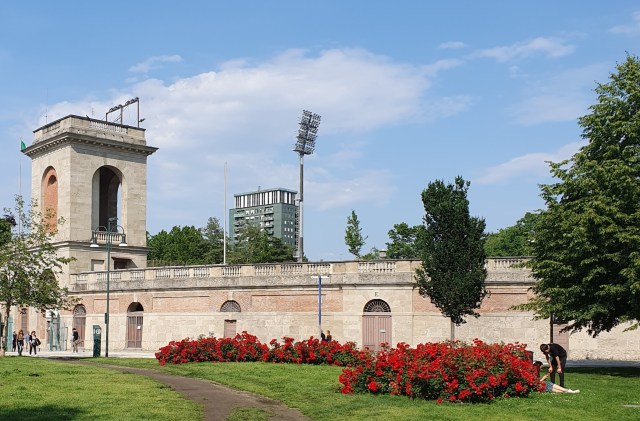
Inter Milan's old stadium, Arena in Parco Sempione, Milan

The history behind the names (and nicknames)

When Benito Mussolini and his fascist party took power in Italy the policy of the regime was that of italianising foreign names so Milan became Associazione Calcio Milan and Inter became Ambrosiana after the city’s patron saint Saint Ambrose, however, Ambrosiana reversed to their original name of Football Club Internazionale Milano after the end of World War II.

The colours of the clubs have led to their commonly used nicknames I Rossoneri (red-black) and I Nerazzuri (black-blue), traditionally the following of Milan is mainly working class (casciavìt – screwdrivers) and the one of Inter is bourgois (bauscia – braggarts).

Derby della Madonnina

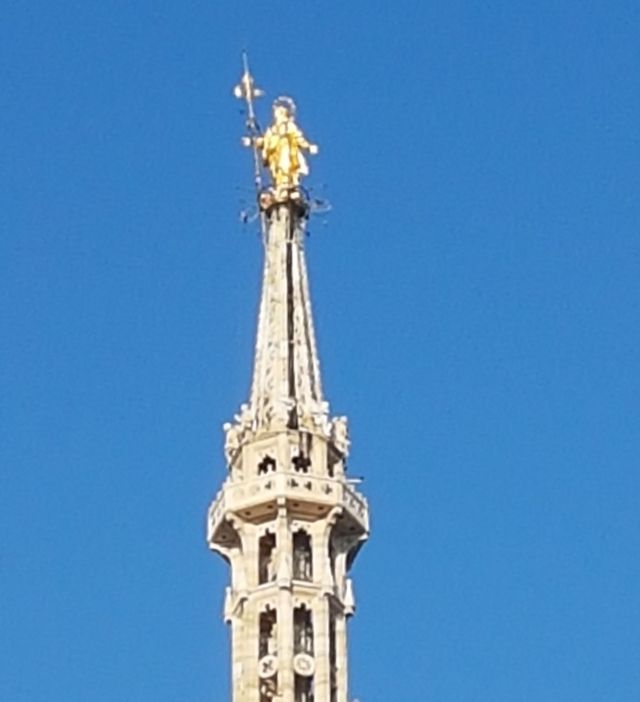
The Milanese derby is in Italian known as il Derby della Madonnina (the derby of the little madonna) after the symbol of Milan, the golden madonna perched on the top of Milan’s cathedral il Duomo di Milano.

La Madonninia, Milan's golden Madonna perched on top of Milan's cathedral, Duomo di Milano

The Milan and Inter shops

There are of course shops with all kinds of football related merchandise ; t-hirts, shorts, footballs etc. in the relevat club’s colours the AC Milan shop is located in Galleria San Carrlo (find on map) and Inter Milan’s shop is very close by at Galleria Passarella (find on map)

Fodbold i Milano, Inter og Milan

Milano er hjem for to af de bedste fodboldhold i verden; AC Milan og Inter Milano. Fodboldklubben AC Milan – oprindeligt Milan Football and Cricket Club – er den ældste med 9 års forspring, men i starten var de den samme klub, der delte sig i to i 1908.

Grundlæggelsen af AC Milan

Milan Football and Cricket Club Milan blev grundlagt d. 16. december 1899 af en gruppe engelske og italienske partnere og klubbens første præsident var Alfred Ormond Edwards, en af grundlæggerne. I januar 1900 blev gruppen tilsluttet FIF (den italienske fodboldføderation) og året efter vandt de det italiensk fodboldmesterskab.

Grundlæggelsen af FC Inter Milano

I 1908 forlod en gruppe partnere A.C. Milan, fordi de var ueninge med klubbens politik mod at hyre udenlandske spillere og grundlagde fodboldklubben Internazionale di Milano kendt som Inter Milano. De blev italienske mestre for første gang i 1910 og er det enesteitalienske fodboldhold, der aldrig er rykket ned i, hvad der svarer til Superligaens andethold , Serie B.

San Siro stadion

Milan's football stadium San Siro/Giuseppe Meazza

Det legendariske San Siro Stadion, officielt Giuseppe Meazza, (find på kort) blev indviet i 1926 af Milan, som ejede det og selve grunden, stadionet blev købt af Milanos kommune i 1934, og i 1947 blev det også Inter Milano’s hjmmebane. Det er også kendt som La Scala del calcio – Fodboldens Scala teater. Forretningen på San Siro stadiet er åbent hver dag mellem 10 og 18.30.

Du kan besøge San Siro stadiet hver dag på museets guidede ture kl. 9.30-19, du kan få mere information om tider og booking her

FC Inter Milanos gamle hjem

Før San Siro eller Meazza, stadion – det blev i 1980 officielt opkaldt efter Interspilleren Giuseppe Meazza – blev bygget var Milans hjemmebane Arena Civica, som ligger i Sempione parken (find på kort), og imellem 1930 og 1947 var Arena Civica Inters hjemmebane, før det spillede de først på Campo di Ripa Ticinese (find på kort) mellem 1908 og 1912 og fra 1913-1930 på Campo Goldoni, som ikke længere eksisterer men findes mellem Via Goldoni 61 og Piazza Novelli (find på kort).

Inter Milan's old stadium, Arena in Parco Sempione, Milan

Historien bag navnene (og kælenavnene)

Da Benito Mussolini og det fascistiske parti kom til magten i Italien indførte de en politik, hvor de italieniserede alle udenlandsklydende navne, og Milan blev Associazione Calcio Milan og Inter blev Ambrosiana efter byens skytshelgen Sankt Ambrosius, men Ambrosiana tog deres gamle navn Football Club Internazionale Milan tilbage efter slutningen af Anden Verdenskrig.

De to klubbers farver har ført til deres populære kælenavne; Milan er I Rossoneri (de røde-sorte) og Inter er I Nerazzuri (de sorte-blå), Traditionelt er Milan tilhængere mest fra arbejderklassen og bliver kaldt casciavìt- skruetrækkere, mens Inters tilhængere er fra det bedre brorgerskab og har fået tilnavnet bauscia – pralhalse.

Derby della Madonnina

Det milanesiske derby er på italiensk kendt som il Derby della Madonnina (den lille madonnas derby) efter symbolet på Milano, den gyldne madonnafigur højt oppe på byens katedral Duomo di Milano (find on map).

La Madonninia, Milan's golden Madonna perched on top of Milan's cathedral, Duomo di Milano

Milan og Inter butikkerne i Milano

Der findes selvfølgelig forretninger med alt muligt fodboldrelateret udstyr; t-hirts, shorts, fodbolde i klubbernes farver, AC Milan butikken ligger i Galleria San Carlo (find på kort) og Inter Milans forretning ligger ganske tæt på i Galleria Passarella (find på kort)

Roman ruins in Milan/Romerske ruiner i Milano

Dansk

Roman ruins in Milan

A brief history of Milan

You may not associate Milan with the Roman Empire, but the city, which was originally a Celtic settlement, was conquered by the Roman consul Calvus in 222 BC and he went on to conquer the entire region. In 286 AD Romam Emperor Diocletian decided to divide the Roma Empire into two; the Western Roman Empire and the Eastern Roman Empire and made Mediolanum (the Latin name for the city) the capital of the Western Empire. Dioceltian chose to reside in Nicodemia, the capital of the Eastern Empire (in today’s Turkey) and left Mediolanum to his colleague emperor Maximian, whom we have to thank for the monuments whose ruins you can visit today. Below is a list of the most important:

The imperial Roman Palace in Via Brisa (find on map)

This was Emperor Maximian’s palace but it was actually so vast that it constituted an entrie district; it was around 80,000 square metres and was built when Mediolanum was made capital.

The Mediolanum Foro Romano (find on map)

The main square of Medoilanum in Roman times is located below today’s Pinacoteca Ambrosiana and the San Sepolcro church, it was built by emperor Augustus between the second and thrid century and was 160 metres by 55 metres, the entrance to the forum is at the corner of Via dell’Ambrosiana and Piazza Pio XI.

The San Lorenzo columns (find on map)

16 (well actually there are 17) eight and a half metre tall marble columns with Corinthian capitals from the 3rd centúry AD. They have been named after the church they are located in front of La basilica di San Lorenzo.

Colonne di San Lorenzo by night, Milan

Basilica di San Lorenzo (find on map)

Although it is used aa a Christian church today, it was originally a pagan temple from the 2nd century AD, the chapel of the church dates back to 400 AD. It is one of the best preserved Roman monuments in Milan.

The Museum of Archeology (find on map)

The museum holds many beautiful examples of Roman attifacts, pottery, mosaics etc. On the museum grounds you can visit the uncovered site of a Roman residence from between the 1st and 3rd Century, it features some beautiful examples of Roman mosaics and pottery and an octagonal Roman watchtower from the outer walls.

The entrance to Milan's archeological museum in Coros Magenta

The mosaics of 2, Via Morigi (find on map)

Here you can see an astounding example of a Roman floor in one of the oldest preserved domus (residence) from Mediolanum, it is from the 2nd century BC

The Roman Theatre (find on map)

The remains of this 2000 year old Amphitheatre covers and area of about 450 square metres, you have to book your visit to this extraordinary ruin by either writing an email to  teatroromano@mi.camcom.it or call +390285154378 or +390285154593 during office hours

Il circo – the Roman Circus in via Circo (find on map)

The circus was built between the third and fourth century and was originally 470 metres by 85 metres and was used mainly for horse racing, it originally spanned an area between Corso Magenta where the archeological museum is located and Via Circo, so it is only the last part of it you can see here today.

The ruins of Milan's Roman circus in Via Circo

The Roman Amphitheatre in Via de Amicis (find on map)

This is where the fights between gladiators, wild animals and even elaborate naval battles took place for the entertainment of an audience of up to 20,000 people, the theatre was built between the second and third century.

The Herculean thermal baths in Largo Corsia dei Servi (find on map)

The ruins of he Herculean thermal baths were built on the orders of Emperor Maximian

Romerske ruiner i Milano

Milanos historie hurtigt fortalt

Du associerer måske ikke Milano med romerriget, men byen, som oprindeligt var en keltisk bosættelse, blev erobret af den romerske konsul Calvus i 222 f. Kr., og han erobrede efterfølgende hele regionen. I 286 e.Kr. besluttede den romerske kejser Diocletian at opdele Romerriget i 2: det Vestromerske Rige og det Østromerske Rige og gjorde Mediolanum (det latinske navn for Milano) til hovedstad i det Vestromerske Rige. Diocletian valgte selv at bo i Nikodemia, som var det Østromerske Riges hovedstad (i nutidens Tyrkiet) og han overlod Mediolanum til sin kollega kejser Maximian, som vi kan takke for mange af de monumenter, hvis ruiner, du kan besøge i dag. Her er de vigtigste.

Det Romerske Kejserpalads i Via Brisa (find på kort)

Det var kejser Maximians palads og faktisk så stort, at det udgjorde et helt distrikt, Det var på ca. 80,000 kvadratmeter og blev bygget, da Mediolanum blev gjort til hovedstad.

Mediolanums Forum Romanum (find på kort)

Medoilanums centrum og centrale plads under romerriget ligger under der, der i dag er Pinacoteca Ambrosiana og San Sepolcro kirken, dte blev bygget af kejser Augustus mellem det 2. og 3. århundrede og var 160 m gange 55 m, indgangen til forum ligger på hjørnet af Via dell’Ambrosiana og Piazza Pio XI.

San Lorenzo søjlerne (find på kort)

16 (rent faktisk er der 17) otte en halv meter høje marmor søjler med korintiske kapitaler fra det 3. århundrere f.Kr. De har fået navn efter kirken, de står foran, La basilica di San Lorenzo.

Colonne di San Lorenzo by night, Milan

Basilica di San Lorenzo (find på kort)

Selvom den bliver brugt som en kristen kirke i dag, var det oprindeligt et hedensk tempel fra det 2. århundrede f.Kr., kirkens kapel er helt tilbage fra år 400 e.Kr.. Det er et af det bedst bevarede romerske monumenter i Milano.

Arkæologimuseet (find på kort)

Dette museum har en meget fin samling af romerske artefakter, keramik, mosaikker osv. Inde på museumsområdet kan du besøge udgravningsstedet af et romesrk hjem fra mellem det 1. og 3. århundrede, der er nogle meget smukke romerske mosaikker, keramik samt et vagttårn og dele af de ydre mure.

The entrance to Milan's archeological museum in Coros Magenta

Mosaikkerne i Via Morigi 2 (find på kort)

Her kan du se et meget smukt romersk gulv i et af de mest velbevarede domus (hjem) fra Mediolanum, det er fra det 2. århundrede f.Kr,

Det romerske teater (find på kort)

Ruinerne af det 2000 år gamle amfiteater dækker et område på omkring 450 kvadratmeter, du skal booke dit besøg ved enten at sende en mail til teatroromano@mi.camcom.it eller ringe enten +390285154378 eller +390285154593 i normal arbejdstid.

Il circo – det romerske cirkus i via Circo (find på kort)

Cirkusset blev bygget mellem det 3. og 4. århundrede var oprindeligt 470 m gange 85 m, det blev fortrinsvis brugt til hestevæddeløb. Cirkusset strakte sig fra Corso Magenta, hvor det arkæologiske museum ligger til her i Via Circo, så det er kun den sidste del, man kan se her i dag.

The ruins of Milan's Roman circus in Via Circo

Det romerske amfiteater i Via de Amicis (find på kort)

Her fandt kampene mellem gladiatorer, vilde dyr og endda detaljerede flådekampe sted for at underholde så mange som 20.000 mennesker, teatret blev bygget mellem det 2. og 3. århundrede.

De termiske Herkules bade i Largo Corsia dei Servi (find på kort)

De termiske Herkules bade blev bygget efter dekret fra kejser Maximian i det 3. århundrede